
June 12, 2025.
As Nigeria commemorates another Democracy Day on June 12th, a day symbolizing the nation’s arduous journey towards democratic governance, a familiar lament echoes across the land: “Many politicians said something and did nothing.”
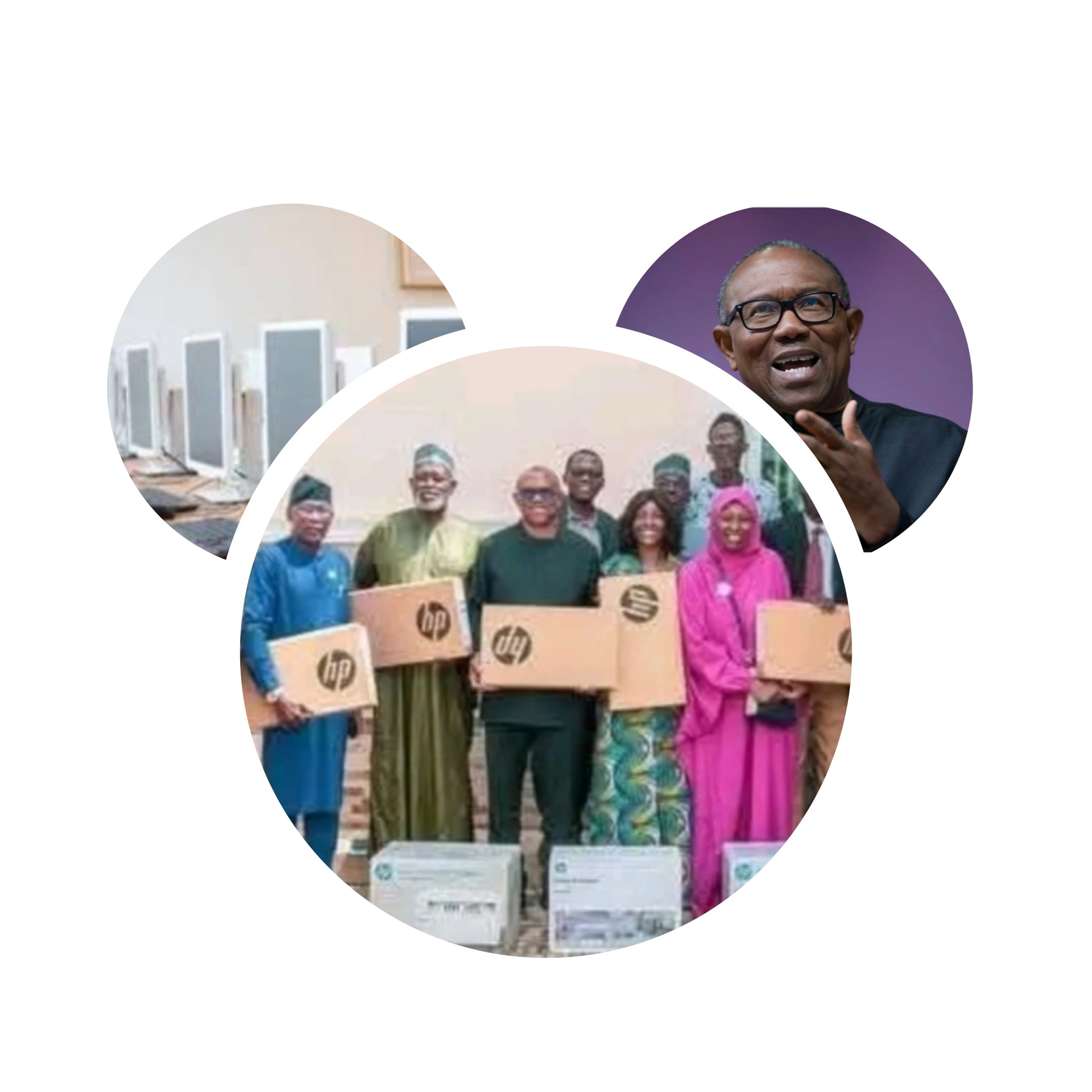
This year, however, amidst the usual reflections on unfulfilled promises and the chasm between political rhetoric and tangible action, a singular act of private philanthropy stands out, offering a refreshing counter-narrative: Peter Obi’s donation of ICT equipment to Government Secondary School, Chibok, in Borno State.
Democracy Day, a national holiday, serves as a poignant reminder of the sacrifices made for the return to civilian rule in 1999, particularly honoring the June 12, 1993, presidential election, widely regarded as Nigeria’s freest and fairest. Yet, for many Nigerians, the day has become a somber annual ritual, highlighting the persistent failure of successive governments to translate democratic ideals into improved living conditions, security, and access to basic amenities.
Year after year, political campaigns are rife with grand pronouncements, ambitious blueprints, and solemn pledges. From promises of economic prosperity and job creation to pledges of enhanced security and infrastructural development, Nigerian politicians often paint a vivid picture of a better tomorrow. However, the reality on the ground frequently tells a different story. Citizens continue to grapple with high unemployment, pervasive insecurity, inadequate healthcare, and a struggling education sector.
The trust deficit between the governed and the government widens with each unfulfilled promise, fueling disillusionment and cynicism. It is against this backdrop of widespread unmet expectations that Peter Obi’s recent intervention in Chibok shines as a beacon of practical commitment. Chibok, a name synonymous with tragedy and national anguish since the 2014 abduction of schoolgirls by Boko Haram, remains a symbol of the immense challenges facing education and security in Nigeria.
Obi, a former governor and prominent political figure, did not arrive with a grand declaration or a televised groundbreaking ceremony. Instead, he quietly facilitated the donation of ICT equipment, including 10 laptops and 3 printers, along with a N6 million cash donation allocated for a laboratory, a computer classroom, and a motorized borehole for the Government Secondary School. This act was reportedly spurred by a direct appeal from activist Aisha Yesufu, who highlighted the dire state of the school, which served over 2,500 students with only a single desktop computer.
While many politicians issue statements about the importance of education, Obi’s action is a tangible investment. He emphasized that such support is not charity but a sincere commitment to the future of the community and the nation. His criticism of government priorities, lamenting that “students don’t have labs, books, or even pencils, while our leaders live in opulence, spending billions to renovate conference centres, build car parks, and furnish new lodges of international standards,” resonates deeply with the frustrations of ordinary Nigerians.
Obi’s practical approach in Chibok offers a stark contrast to the often-empty rhetoric that dominates Nigeria’s political landscape. It highlights a critical need for leaders who are not just adept at making promises but are genuinely committed to impactful, grassroots development.
As Nigerians reflect on Democracy Day, Peter Obi’s singular act serves as a powerful reminder that true leadership is demonstrated not just by what is said, but by what is actually done, especially in the lives of those most in need. His intervention in Chibok, a community that has endured so much, offers a glimmer of hope and a challenge to all political actors to move beyond mere words and embrace a genuine commitment to action.
By Ezon Efie Correspondent, Abuja.
08058009988

