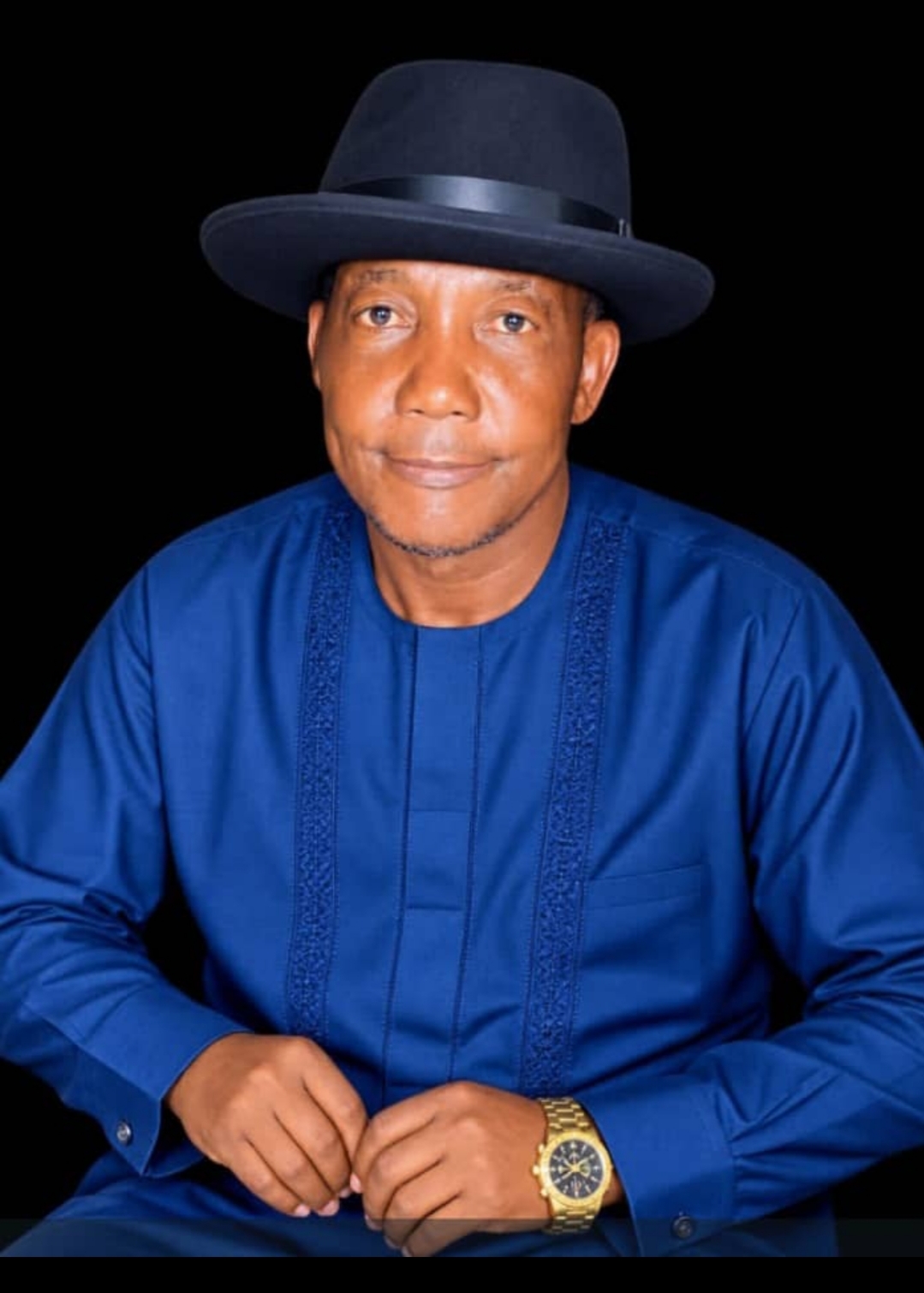
By Engr. Henry Yeigagha, JP
ANCESTRAL ROOTS
There are men whose lives announce themselves through the thunder of public acclaim, and there are others whose significance unfolds in the quieter registers of service, character, and personal dignity. The late Pa Dominic Davis Bayoko belonged to the latter tradition: a gentleman of measured disposition, cultivated expression and unostentatious refinement, whose earthly passage was distinguished by professional commitment, personal resilience and a life lived substantially beyond the clamour of public recognition.
Born in 1940, Pa Bayoko was the son of late Pa Adirimo Bayoko of Ogodobiri and late Madam Diyemi Bayoko, née Okumakpeyi, of Ezebiri. Through his maternal lineage, he also possessed Itsekiri ancestry, a genealogical connection that speaks to the intricate cultural interweaving characteristic of the Niger Delta. His origins were rooted in communities whose histories, identities, and kinship traditions have long contributed to the rich human tapestry of the region.
In his family life, Pa Bayoko was married to the late Madam Kirifagha Bayoko, née Otere, of Ayakoromo; Madam Kwekwe-ere Bayoko, née Patani, of Ayakoromo; and Madam Korkor Bayoko, née Eyebodongha, of Enekorogha Town, all in Burutu Local Government Area, Delta State. These marital unions formed part of the intimate fabric of his personal history, adding another dimension to the life he built across the years. His family relationships, like other aspects of his earthly journey, belonged to the wider narrative of a man whose experiences were shaped by kinship, companionship, and the changing seasons of life.
To remember Pa Bayoko, therefore, is to revisit not merely the biography of an individual, but the unfolding story of a man whose identity was shaped by ancestral inheritance, professional vocation, personal convictions and the enduring relationships he cultivated throughout his life. His story invites us to consider the quieter virtues through which an individual becomes memorable: integrity of character, intellectual curiosity, self-possession, and the capacity to inhabit one’s circumstances without surrendering one’s individuality.
MEDICAL SERVICE
Pa Bayoko’s professional journey began with a commitment to medical service, following which he proceeded to the School of Health Management Board, Ibadan, where he received the training that prepared him for his chosen vocation. His specialisation in the treatment of leprosy and tuberculosis placed him within a demanding field of healthcare, one requiring not only technical competence but also patience, compassion, and an understanding of the human vulnerabilities that accompany illness.
His professional career traversed the administrative epochs of the Mid-Western State, Bendel State, and Delta State. Within this changing institutional landscape, he served at the leprosy settlement of Ayakoromo Federated Community, where his engagement brought him into direct contact with patients whose conditions demanded sustained medical attention and humane consideration. It was a vocation in which professional responsibility intersected with the delicate business of caring for people whose afflictions could expose them to physical suffering and social prejudice.
In 1996, having devoted a substantial portion of his productive years to medical service, Pa Bayoko retired from his professional engagement. His retirement marked the formal conclusion of his working career, but it could not diminish the significance of the years already invested in the service of humanity. For a man whose professional life had been devoted to the care of others, retirement represented a transition from the obligations of institutional service to another season of personal existence, reflection, and community life.
His medical career remains an essential chapter in the account of his life. It reminds us that service does not always require a grand public platform to possess enduring worth; sometimes, its nobility resides in the quiet fulfilment of professional obligations and in the lives touched through the conscientious discharge of one’s duties.
46 YEARS IN AYAKOROMO
Of the many chapters that constituted Pa Bayoko’s earthly narrative, his forty-six years in Ayakoromo Federated Community occupy a place of exceptional significance. Forty-six years are more than a measure of elapsed time; they constitute a substantial portion of a human lifetime, sufficient for friendships to mature, relationships to acquire depth, experiences to accumulate and personal history to become inseparable from the collective memory of a community.
Ayakoromo was not merely the geographical location of his residence. It became the setting within which a considerable portion of his adult life unfolded, accommodating his professional engagement, social relationships, personal experiences, and the ordinary vicissitudes of human existence. Across those decades, he witnessed changing circumstances, encountered personal challenges, and navigated the inevitable complexities of communal living.
Like every life worthy of serious reflection, his was not entirely exempt from adversity. He confronted difficulties along the way, but he also demonstrated the resilience necessary to overcome them. His experience affirms a fundamental truth about human existence: the measure of a life is not determined exclusively by the absence of hardship, but also by the fortitude with which hardship is confronted and the composure with which one continues one’s journey.
His compound was fondly known as “Bayoko Egede,” an affectionate appellation through which his identity became familiar within the community. Such names often transcend their immediate descriptive function to become repositories of memory, association, and communal familiarity. In this instance, the name evokes the presence of a man whose years in Ayakoromo were long enough to establish a distinctive place in the recollections of those who knew him.
His forty-six-year sojourn in Ayakoromo remains a defining feature of his biography. Though the circumstances of life eventually compelled him to leave, the years he spent there cannot be separated from the larger narrative of who he was and the memories he bequeathed to the community.
A PEACEFUL SOUL
Pa Bayoko possessed a temperament that accommodated solitude without being diminished by it. He could remain indoors for an entire month, apparently content to inhabit the quiet precincts of his private world without feeling compelled to participate constantly in the social engagements that animated the lives of others. Such a disposition suggested a man who had made a measure of peace with his own company and did not require perpetual external stimulation to sustain his sense of personal contentment.
His preference for solitude, however, should not be misconstrued as emotional coldness or an incapacity for human fellowship. Rather, it formed part of the distinctive architecture of his personality. He could withdraw into privacy when he wished, yet he was equally capable of engaging warmly with friends and acquaintances. His character thus accommodated both contemplation and conviviality, both the stillness of private existence and the animation of social interaction.
There is a certain dignity in the ability to remain comfortable within one’s own company. In a world increasingly preoccupied with visibility, constant engagement, and the pursuit of external validation, Pa Bayoko’s disposition offers a quiet reminder that personal fulfilment need not depend upon perpetual public presence. Some individuals find their equilibrium in the measured rhythm of an unhurried life, and their contentment is no less authentic because it is expressed without spectacle.
Throughout his years in Ayakoromo, he lived through the ordinary strains and extraordinary challenges that accompany human relationships and communal existence. Yet his story remains that of a man whose individuality was not entirely surrendered to the demands of his environment. He maintained his personal rhythm, navigated life’s complexities, and continued along his chosen path with a disposition that was distinctly his own.
THE READING MAN
Among Pa Bayoko’s most distinguishing attributes was his abiding affection for books and newspapers. He was a man who appreciated the written word and recognised the intellectual nourishment that comes from sustained engagement with information, ideas, and the wider world. His reading habit was more than a casual pastime; it reflected a disposition receptive to knowledge and an appreciation of the written record as a window into human affairs.
His command of the English language was equally remarkable. He possessed an eloquence that enabled him to articulate his thoughts with clarity, persuasion, and considerable verbal assurance. He was not merely a man who spoke; he was a man who could marshal language in the service of expression, giving his opinions the force of coherence and his conversations the attraction of articulate delivery.
A persuasive orator, he understood, in his own way, that language possesses an influence beyond the mere transmission of information. Words can illuminate thought, establish conviction, animate discussion, and leave impressions that outlive the conversations in which they are spoken. His facility with English, therefore, formed an important dimension of his personality, complementing his intellectual interests and enriching his interactions with others.
His love of reading and his eloquence together presented the portrait of a man who appreciated both the acquisition of knowledge and the art of communicating it. These attributes distinguished him in the estimation of those who knew him and added intellectual colour to the recollections associated with his life.
WIT AND WARMTH
Beneath Pa Bayoko’s composed exterior lay a playful disposition that found expression in his enjoyment of good times with friends. He understood that life, for all its responsibilities and inevitable disappointments, must also make room for laughter, companionship, and the restorative pleasures of human fellowship. His appreciation of convivial moments revealed a lighter dimension of his character, balancing the quietness of his private life with the warmth of social interaction.
He could be contemplative without being perpetually solemn, reserved without being devoid of humour, and comfortable in solitude without being incapable of friendship. These apparent contrasts gave his personality a certain individuality. He was not a man who could be adequately described through a single attribute, for his character contained the varied shades that make human beings both complex and memorable.
His friendships offered occasions for the expression of this convivial side. In the company of those with whom he was comfortable, he could participate in the pleasures of conversation and shared enjoyment. Such moments, though perhaps ordinary when they occurred, often become precious in retrospect when the passage of time transforms familiar encounters into treasured recollections.
In remembering Pa Bayoko, therefore, it is fitting to recall not only the medical practitioner, the articulate speaker, and the prudent man, but also the friend who appreciated life’s lighter moments. A complete remembrance of any individual must make room for these seemingly modest details, for they are often the very elements through which a personality becomes vivid in the memories of others.
PRUDENT LIVING
If there was a principle that conspicuously governed Pa Bayoko’s personal affairs, it was the discipline of living within one’s means. He maintained a prudent relationship with his resources and was not known for borrowing even a dime to sustain his lifestyle. His approach to financial management reflected a practical philosophy founded upon self-restraint, personal responsibility, and the preservation of independence.
He frequently advised those within his circle to live according to their income, counsel that derived its credibility from the consistency between his words and his own conduct. He did not merely recommend financial discipline as an abstract virtue; he embodied it in the manner in which he managed his affairs. His example suggested that genuine contentment is not necessarily a function of possessing everything one desires, but of learning to distinguish between what is necessary, what is affordable and what is merely demanded by the vanity of appearances.
There is enduring wisdom in this philosophy. The temptation to live beyond one’s financial capacity often arises from the desire to impress others, imitate lifestyles, or maintain an image that personal resources cannot sustainably support. Pa Bayoko’s disposition stood in contrast to such tendencies. He appeared to understand that the pursuit of appearances can become an expensive form of self-deception, while financial prudence offers a more reliable foundation for peace of mind.
His insistence on living within one’s means was, in essence, an endorsement of personal dignity. A life unencumbered by unnecessary debt affords a measure of freedom that cannot easily be purchased through outward display. By counselling his acquaintances to exercise financial restraint, he passed on a practical lesson whose relevance extends beyond his generation.
In an age when material exhibition can sometimes eclipse substance, Pa Bayoko’s example remains instructive. His life affirms that the quiet management of one’s resources may be a more enduring achievement than the temporary admiration elicited by extravagant living.
FROM AYAKOROMO TO WARRI
The circumstances surrounding Pa Bayoko’s departure from Ayakoromo constituted one of the more consequential turning points in his later life. Following the military invasion of Ayakoromo during the search for late General John Togo, he left the community and relocated to Warri, where he spent the remaining years of his earthly existence.
The departure carried a significance beyond the physical distance between two locations. Ayakoromo had been his home for forty-six years, the setting of his professional engagement, the repository of many personal experiences, and the backdrop against which a substantial portion of his life had unfolded. To leave such a place under the shadow of insecurity was to enter a new chapter under circumstances not entirely of one’s choosing.
Communities are more than collections of houses, roads, and familiar landmarks; they are repositories of personal history. They hold the memories of friendships, the rhythms of everyday life, and the accumulated associations through which people develop a sense of belonging. For someone who had spent nearly half a century in one community, departure inevitably carried the weight of separation from a familiar world.
His relocation to Warri marked the beginning of a different season. The life he had known in Ayakoromo gave way to the circumstances of his remaining years in another urban environment. Nevertheless, the significance of his long residence in Ayakoromo remained undiminished. The community continued to occupy a central place in the narrative of his life, not merely as a former address but as the setting of forty-six consequential years.
His story thus intersects with a wider chapter of Niger Delta experience, in which insecurity and military operations disrupted established patterns of communal life and compelled individuals to seek safety elsewhere. Within that larger history, Pa Bayoko’s relocation represents the personal dimension of events whose consequences extended far beyond the immediate theatre of conflict.
HIS FINAL JOURNEY
On 5 January 2024, Pa Dominic Davis Bayoko breathed his last in Warri following a brief illness. He was eighty-three years old. With his passing, a distinctive human journey reached its earthly conclusion, bringing to a close a life that had traversed professional service, communal belonging, personal adversity, intellectual interest and the quiet pursuit of individual contentment.
Death inevitably introduces a finality that human affection finds difficult to reconcile with the permanence of memory. The physical presence of a loved one may disappear, but the impressions left by a lifetime of conduct continue to inhabit the recollections of family members, friends, and acquaintances. In this sense, remembrance becomes the bridge between the life that has ended and the enduring significance of the person who once occupied it.
Pa Bayoko’s life offered several points of remembrance: his years of medical service, his retirement in 1996, his extraordinary forty-six-year residence in Ayakoromo, his affection for books and newspapers, his eloquent command of English, his enjoyment of friendship and his unwavering preference for prudent living. Each attribute contributes a different shade to the portrait of the man he was.
His death, therefore, invites more than the observance of bereavement. It invites reflection upon the character of a man who lived through different historical and personal seasons, experienced the ordinary complexities of human existence, and eventually departed after a long earthly journey. The memories he leaves behind constitute the human residue of a life that, like every life, possessed its own distinctive texture and meaning.
As his family, friends, and acquaintances prepare to commemorate him, the occasion offers an opportunity to gather these scattered recollections into a fuller appreciation of his existence. For the departed, the earthly journey is over; for those who remain, the work of remembering begins anew.
A LASTING LEGACY
The enduring significance of Pa Dominic Davis Bayoko’s life does not rest upon claims of extraordinary public prominence or material ostentation. It resides instead in the cumulative force of his personal attributes, professional service, and the relationships that accompanied him through the successive chapters of his existence. His was a life whose meaning is best approached through the particulars: the medical practitioner who served his community, the reader who cherished books and newspapers, the orator who commanded the English language, the friend who enjoyed convivial moments and the prudent man who counselled others to live within their means.
His forty-six years in Ayakoromo remain among the most defining features of his biography. Such an extended residence established a profound connection between his personal history and the community that accommodated him for nearly half a century. Although he eventually departed for Warri under difficult circumstances, his years in Ayakoromo remain an inseparable part of the story through which he will be remembered.
His professional career, which concluded with his retirement in 1996, provides another important dimension to his legacy. It reflects a period of service during which he applied his training and specialised knowledge to the treatment of illness. Beyond the formalities of employment and retirement, that chapter of his life stands as a reminder that the dignity of a profession is often realised through the faithful discharge of its responsibilities.
There is also a lesson in the personal philosophy he espoused. His preference for financial prudence, his resistance to living beyond his means, and his willingness to counsel others in the same direction speak to a conception of dignity grounded in self-discipline rather than ostentation. These are virtues whose relevance does not expire with the generation that practises them; they remain available to anyone willing to learn from the accumulated experience of another life.
Ultimately, the story of Pa Bayoko is a reminder that human significance is not always measured by the magnitude of one’s public achievements. Sometimes, it is preserved in the constancy of one’s habits, the quality of one’s conversations, the discipline of one’s private affairs, the years spent in a community and the memories retained by those whose lives intersected with one’s own.
As we remember him, we celebrate a man who served his profession, valued knowledge, cultivated eloquence, appreciated friendship, and upheld the principle of prudent living. We acknowledge the complexities of his journey, the challenges he encountered, the community that became his home for forty-six years, and the final chapter he spent in Warri.
His earthly sojourn has ended, but the account of his life remains part of the human history of the people and places with which he was associated. In the final reckoning, perhaps the most enduring tribute to a departed soul is not an exaggerated account of perfection, but a truthful remembrance of a life lived with its distinctive convictions, experiences and contributions.
Adieu, Pa Dominic Davis Bayoko. Adieu, Bayoko Egede. Born in 1940. Departed on 5 January 2024. Remembered beyond the grave.